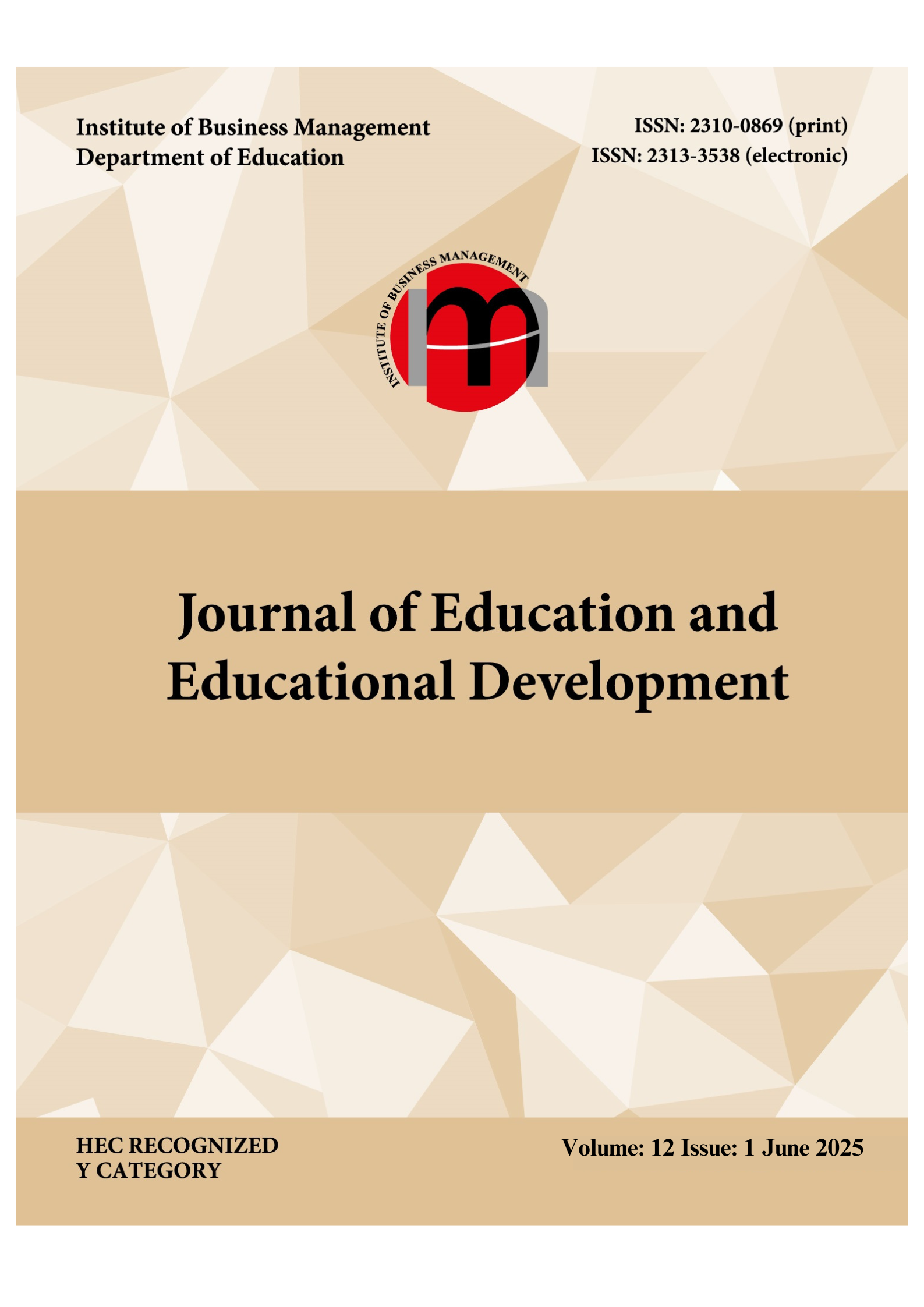
Academic Freedom and Participation Dichotomy in Higher Education in Southern Africa
DOI:
https://doi.org/10.22555/joeed.v12i1.1174Keywords:
Academic Freedom, Participation Dichotomy, Social Justice Southern African Higher Education, Human RightsAbstract
This study was guided by the grounded theory methodology to examine the nexus between academic freedom and participation dichotomy in higher education in Southern Africa with particular focus on Zimbabwe, South Africa, Malawi, and Botswana. The study borrowed significantly from the theory of human rights, particularly the natural and subsidiary rights such as the right to self-sovereignty, ownership of what one creates, personal security, manage one’s life and freedom of conscience. The study deduced that academics in Southern African higher education have severe threats to academic freedom and participation that are manifested through restrictions in funding, research, remuneration, curriculum, political hegemony, gender and linguicism. Significant abuse of academic freedom was inferred to be orchestrated by political governments, leaders of academic institutions, academics and journals in the Global North. The study recommended that political leaders create free space for academics to communicate their research and teach without censorship. The governments, higher education leaders and other stakeholders need to enforce language and gender polices that protect women and African indigenous languages from gender discrimination so as to promote their active inclusion. The political governments should also fuse academic freedom into their constitutions as part of academic and human rights to be protect.
References
Ackerly, B. (2022). 17. Theory in Practice: Making Human Rights Claims in a Human Rights Way. Human Rights, 360–379.https://doi.org/10.1093/hepl/9780190085469.003.0020
Adu, K. K., & Odame, J. (2023). Academic freedom in Africa: A systematic review of content analysis studies. International Journal of Educational Development, 100, 102785. https://doi.org/10.1016/j.ijedudev.2023.102785
Akindipe, O. O. (2020). Brain drain: The relationship between strikes, educational funding and educational migration in Nigeria. In Culture and Development in Africa and the Diaspora (pp. 50-58). Routledge.
Appiagyei-Atua, K. (2019). Students' academic freedom in African universities and democratic enhancement. African Human Rights Law Journal, 19(1), 151-166.
Appiagyei-Atua, K., Beiter, K. D., & Karran, T. (2016). A review of academic freedom in African universities through the prism of the 1997 ILO/UNESCO recommendation. AAUP Journal of Academic Freedom, 7(2), 1-23.
Atapattu, S. (2022). 14. Human Rights and the Environment. Human Rights, 296–319. https://doi.org/10.1093/hepl/9780190085469.003.0017
Benatar, S. R. (2016). Freedom of speech, academic freedom, and challenges to universities in South Africa. Society, 53, 383-390.
Bryant, A. (2017). Grounded theory and grounded theorizing: Pragmatism in research practice. Oxford University Press.
Chibita, M. B. (2016). Indigenous language media and freedom of expression in Uganda. In Indigenous language media, language politics and democracy in Africa (pp. 28-56). London: Palgrave Macmillan UK.
Chitando, E., & Mlambo, O.B. (2014) Academic freedom in Zimbabwe. Pax Academia, 35-54
Eriyanti, F., Alhadi, Z., Engkizar, E., Moeis, I., Yussof, M. A., & Ibrahim, R. (2018). Impact Of Government Policy On Formal Education Of Minangkabau And Nias Ethnicity Fishermen’s Children In Indonesia. Jurnal Socius: Journal of Sociology Research and Education, 5(1), 42. https://doi.org/10.24036/scs.v5i1.107
Goodhart, M. (2022). The Politics of Human Rights. Human Rights, 48–70. https://doi.org/10.1093/hepl/9780190085469.003.0005
Heleta, S. (2022). "Chapter 11: Eurocentrism, racism and academic freedom in South Africa". In Handbook on Academic Freedom. Cheltenham, UK: Edward Elgar Publishing. Retrieved Jul 14, 2024, from https://doi.org/10.4337/9781788975919.00019
Ighobor, K. (2017). Diagnosing Africa’s medical brain drain. Africa Renewal, 30(3), 8–9. https://doi.org/10.18356/001e61ba-en
Jackson, B.-F. L. (2021). Intellectual Freedom, Academic Freedom, and Social Justice. Academic Freedom: Autonomy, Challenges and Conformation, 173–181. https://doi.org/10.1108/978-1-83909-882-620211013
Johnson, D. (2020). Pan-Africanism: Freedom for Africa. Dreaming of Freedom in South Africa, 133–157. https://doi.org/10.3366/edinburgh/9781474430210.003.0006
Karran, T., Beiter, K., & Appiagyei-Atua, K. (2022). 4 - A Review of Academic Freedom in Africa through the Prism of the UNESCO’s 1997 Recommendation. Journal of Higher Education in Africa, 14(1). https://doi.org/10.57054/jhea.v14i1.1508
Keane, E., & Thornberg, R. (2024). Grounded Theory and Constructivist Grounded Theory. The Routledge International Handbook of Constructivist Grounded Theory in Educational Research, 3–31. https://doi.org/10.4324/9781003425403-2
Kori, E. (2016). Challenges to academic freedom and institutional autonomy in South African universities. International Journal of Teaching and Education, IV(1), 45–53. https://doi.org/10.20472/te.2016.4.1.004
Langlois, A. J. (2022). 1. The Philosophical Foundations of Human Rights. Human Rights, 6–26. https://doi.org/10.1093/hepl/9780190085469.003.0003
Majawa,C.C.A. (2020).Academic freedom in African higher education: patristic philophical inquiry. Nairobi: The Catholic University of Eastern Africa
Makalela, L. (2016). Language Policy and Education in Southern Africa. Language Policy and Political Issues in Education, 1–11. https://doi.org/10.1007/978-3-319-02320-5_38-1
Mama, A. (2022). 1 - Towards Academic Freedom for Africa in the 21st Century. Journal of Higher Education in Africa, 4(3), 1–32. https://doi.org/10.57054/jhea.v4i3.1648
Motshweni, S. (2019). The feminist agenda, a fall of hierarchal redress or an attempt to establishing an ‘equal’ society gone wrong: an internal critique to feminist theories. Pretoria Student Law Review, 13. https://doi.org/10.29053/pslr.v13i.1871
Moyo, J. (2009). Academic Freedom and Human Rights in Zimbabwe. Social Research: An International Quarterly, 76(2), 611–614. https://doi.org/10.1353/sor.2009.0037
Mwamwenda, T. S. (2018). Brain Drain in Africa: The Dilemma Of Human Flight In Africa. Ponte International Scientific Researchs Journal, 74(9). https://doi.org/10.21506/j.ponte.2018.9.7
Nadi, A. (2022). Social-Cultural Informal Education In Gardu (Pos Kamling). Jurnal Socius, 11(2), 98. https://doi.org/10.20527/js.v11i2.12041
Ndereyimana, L. (2021). The History of Academic Freedom in Africa: Issues, Challenges and Perspectives. Advances in Literary Study, 9, 154-158. https://doi.org/10.4236/als.2021.93017
Ngoh, N. N. (2021). The Status of Academic Freedom in Cameroon. Academic Freedom: Autonomy, Challenges and Conformation, 111–123. https://doi.org/10.1108/978-1-83909-882-620211008
Nsibande, R & Macfarlane, B. (2018). Freedom to Learn: The Treat to Student Academic Freedom and Why it Needs to be Reclaimed. London: Routledge. Journal of Student Affairs.
Nyamnjoh , F.B. (2015). Introduction: Academic Freedom in African Universities Nos 1&2, Pax Academica, 1(2), 47-70.
Nyamnjoh, A., & M. Luescher, T. (2022). "Chapter 16: Academic freedom, students and the decolonial turn in South Africa". In Handbook on Academic Freedom. Cheltenham, UK: Edward Elgar Publishing. Retrieved Jul 14, 2024, from https://doi.org/10.4337/9781788975919.00026
Odendaal, R. T. (2024). The ‘Open’ Performance: Institutional Autonomy over Academic Freedom in the 1950s Academic Freedom Campaigns. History through Narratives of Education in Africa, 281–304. https://doi.org/10.1163/9789004690172_012
Oloruntoba-Oju, T., & van Pinxteren, B. (2022). Issues in introducing indigenous languages in higher education in Africa. Language Problems and Language Planning, 47(1), 1–23. Portico. https://doi.org/10.1075/lplp.22005.olo
Prah, K. K. (2015). Language, Literacy and Knowledge Production in Africa. Literacies and Language Education, 1–11. https://doi.org/10.1007/978-3-319-02321-2_3-1
Ramohai, J. (2019). A black woman’s perspective on understanding transformation and diversity in South African higher education. Transformation in Higher Education, 4(1), 1-10.
Taiwo, E.A. (2011). Regulatory Bodies, Academic Freedom and Institutional Autonomy in Africa: Issues and Challenges – The Nigerian Example. Journal of Higher Education in Africa, 9(1–2), 63–89. https://doi.org/10.57054/jhea.v9i1-2.1574
Tyatya, K.(2020) Time for black women to lead in higher education. Maverick Citizen OP- ED. 22 July 2020. https://www.dailymaverick.co.za/article/2020-07- 22-time-for-black-women-to-lead-in-higher-education/
Vurayai, S. (2022). Knowledge Democracy and Feminist Epistemic Struggle in African Universities. Decolonising African University Knowledges, Volume 1, 84–102. https://doi.org/10.4324/9781003228233-7
Williams, J. (2016). From Academic Freedom to Academic Justice. Academic Freedom in an Age of Conformity, 175–194. https://doi.org/10.1057/9781137514790_8
Yousaf, R., & Schmiede, R. (2017). Barriers to women’s representation in academic excellence and positions of power. Asian Journal of German and European Studies, 2(1). doi:10.1186/s40856-017-0013-6
Downloads
Published
Issue
Section
License
Copyright (c) 2025 Journal of Education and Educational Development

This work is licensed under a Creative Commons Attribution 4.0 International License.